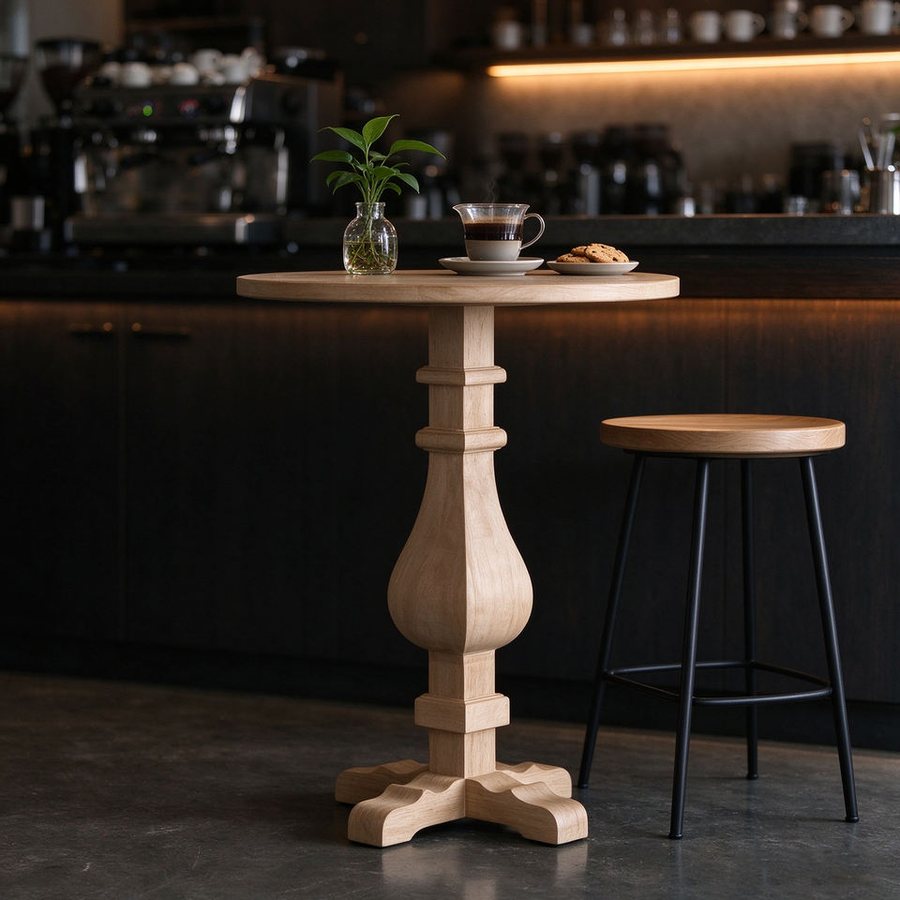
Solid wood pedestal bar table, 1060 mm
All-timber at standing height is the hardest version of this table to build, because the pedestal has to carry an off-centre lean through a joint that a steel frame would simply weld shut.
| Top | Ø800 mm |
|---|---|
| Height | 1060 mm |
| Top material | Solid wood |
| Base | Solid wood pedestal |
| Size and colour | Made to order |
| Finish | Hand finished |
| Terms | EXW Foshan or DDP to your address |
Trade enquiries only · EXW Foshan or DDP · replies inside three working days
The joint is the whole product
Timber carries the same load at 1060 mm that a steel column does, through a material that moves with the season. The base is built wide and the joint is machined to a shoulder rather than butted, so the lean of a guest is taken by timber bearing on timber instead of by a screw in tension.
That is also why this table is made to order rather than stocked in one size: the pedestal has to be proportioned to the top, and the top to the number of people the room expects to stand there.
800 mm across
Four people can stand at 800 mm without touching elbows, which is the size a busy bar wants at the end of a run where groups form. Two people at 800 mm look lost; that mismatch is what makes a room feel half-full at nine o'clock.
Height stays at 1060 mm regardless of the top size, so a room can mix 700 and 800 mm tops along one run and keep a single standing line.
Timber in a wet room
Spilled beer and a wet cloth are the two things a timber pedestal sees most, and both are survivable with the right finish. Oil needs re-oiling once a year and can be repaired at the table; a hard lacquer holds longer but shows every knock. Either way, the base should sit on glides rather than directly on a floor that gets mopped nightly.
Next in the same range
Send a floor plan, get a priced layout back
Tell us the counter length, the number of covers and the look you want. We come back with stool counts, heights, finishes and a written quotation — usually inside three working days.