What each material actually survives
The finish is not a colour card. It is a decision about how the furniture looks at year three, and what it costs per year to keep it there.
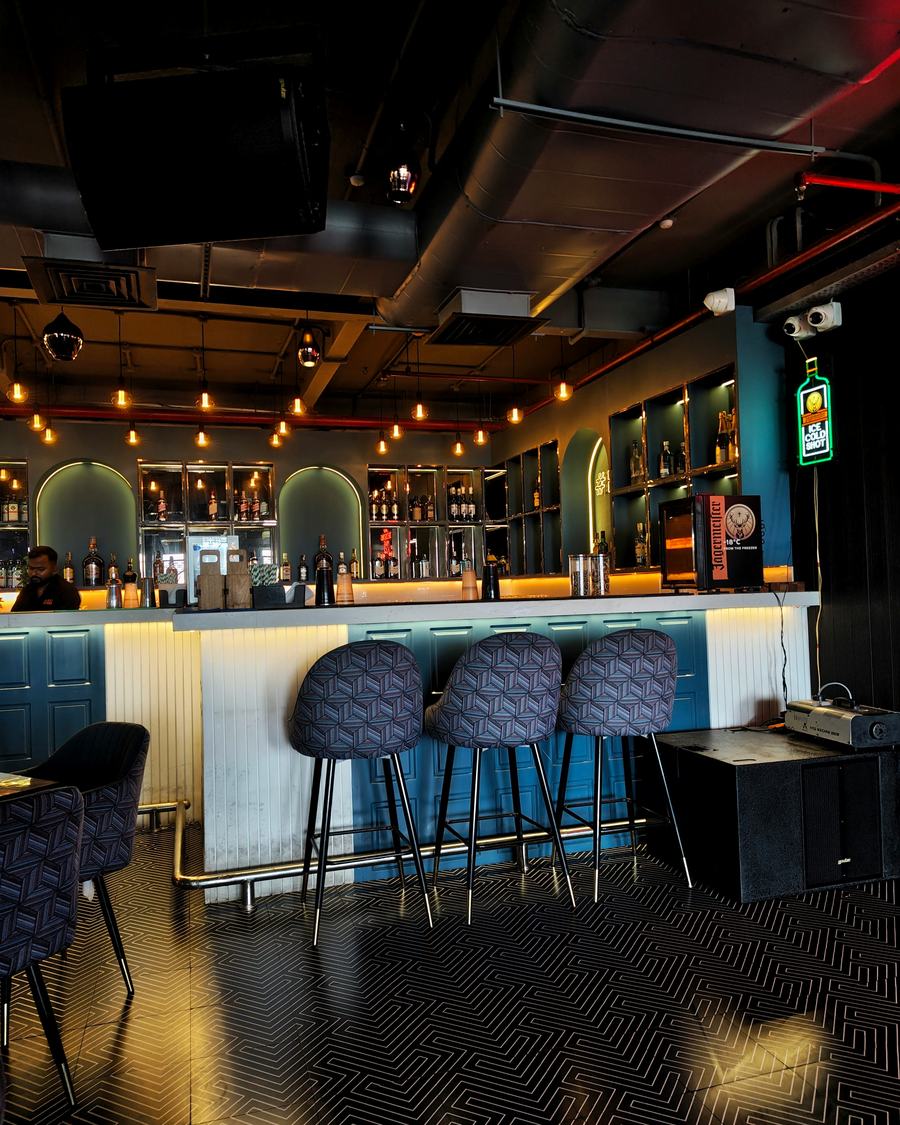
Frames: the part that decides the lifetime
Upholstery is what people notice and the frame is what they replace. Choose the frame for the load and the room, then choose the cover.
Solid ash
The default for stools and chairs in a pub. Ash takes a stain well, machines cleanly, and has enough spring to absorb the impact of someone dropping onto a seat from standing height. It also shows knocks as character rather than damage, which is why it survives a floor where a lacquered veneer would look tired in two years.
Solid oak is heavier and harder, and reads darker under the same light. It is worth the difference in a room where the timber is meant to be seen, less so on a stool that will be mostly covered by a seat pad and a guest.
Stainless steel
Specified where the frame will be wet, kicked, or cleaned with chemicals — behind a bar, in a taproom, anywhere a mop passes twice a night. Grade 304 is the working default; 201 is cheaper and will show surface corrosion in a humid room within a year, so we do not quote it for bar frames.
Brushed or mirror finish both hide fingerprints differently: brushed hides them, mirror shows every one. In a dark room with low light, brushed reads as warm metal and mirror reads as a highlight.
Powder-coated steel
The cheapest way to get a specific colour onto a frame, and a good one, provided the coating is specified properly. 60-micron polyester powder coat on a properly pre-treated tube will take years of knocks; a thin decorative coat will chip at the foot within months and then rust from the chip outwards.
Upholstery: what a bar actually throws at it
| Contract vinyl | Wipes clean, resists citrus and beer, holds colour. The safest default wherever food and drink are present. Looks synthetic under warm light unless a matte finish is chosen. |
|---|---|
| PU leather | Close to vinyl at a lower cost. Softer hand, less resistant to repeated cleaning with aggressive products. Good for low-turnover areas, less so at a main counter. |
| Wool | Looks best for longest, breathes, and does not squeak. Absorbs spills and needs a cleaning regime; a single red wine spill left overnight will not come out. |
| Bouclé | Photographs beautifully and is comfortable. Pills and traps crumbs. Right for a snug or a lounge corner, wrong for anywhere a plate lands. |
| COM | Your own fabric, sent to us. We test it against the frame before quoting, because a light upholstery fabric on a bar seat is a decision we would rather flag now than after production. |
Cleaning cost, not purchase cost
Two covers can cost the same and differ by a factor of three over five years. Matte contract vinyl at a main counter wipes with a damp cloth in seconds and stays consistent. Wool that needs a professional clean twice a year costs more in maintenance than the vinyl cost to buy.
Metal finishes that are not stainless
Brass and antique brass are usually specified as a plated or PVD finish over steel, not solid brass. PVD holds colour far better than lacquered plating, which wears through at the footrest where shoes contact it. Where a client wants real brass patina, we say plainly that it will need periodic polishing and will not be uniform across a run.
Blackened steel and dark bronze effect finishes are increasingly specified for bar frames. Both need a clear coat or an oil to stay consistent, and both will mark if cleaned with an abrasive.
Swatches and samples
We send physical swatches rather than screen colours, because a screen cannot show how a matte vinyl behaves under a warm pendant. Sample stools are built in 15 days with no sampling fee and one revision included, in your fabric and your finish, so the material decision is made against the real light in the real room.
Which frame material lasts longest in a bar?
Is PU leather good enough for bar seating?
Can I supply my own fabric?
How thick should a powder coat be?
Do you send physical swatches?
Send a floor plan, get a priced layout back
Tell us the counter length, the number of covers and the look you want. We come back with stool counts, heights, finishes and a written quotation — usually inside three working days.