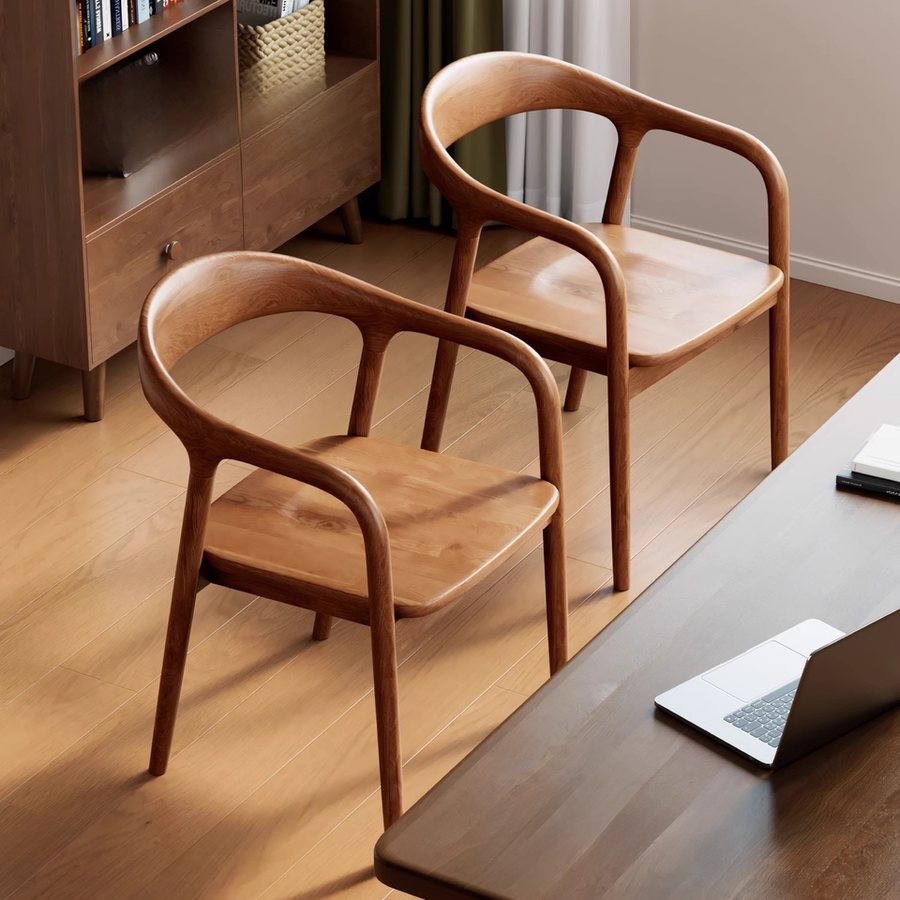
Timber back chair on a metal leg frame
Mixing timber and steel is not a style choice on a commercial floor, it is a way of putting each material where it actually works.
| Back | Shaped solid timber |
|---|---|
| Frame | Welded steel, bolted to timber with inserts |
| Footprint | 500 × 500 mm |
| Overall | 500 × 500 × 780 mm (W × D × H) |
| Colours | To order |
| Terms | EXW Foshan or DDP to your address |
Trade enquiries only · EXW Foshan or DDP · replies inside three working days
Why the back is timber and the legs are not
Guests lean on the back dozens of times a night and never touch the legs. Timber gives the back a warmth and a shape that steel cannot, and a shaped back is the part of a chair people remember. The legs get kicked, dragged and caught under table bases, which is work for a welded frame.
Splitting the two also splits the repair. Bent legs on a steel frame are a leg swap; cracked backs on a timber frame are a back swap. Neither takes the whole chair out of service.
The fixing between them
Where timber meets steel is the one place this construction can go wrong. Steel brackets screwed into timber pull out under repeated side load; the frame here carries the timber on a plate that is bolted through with threaded inserts, so the load goes into the insert rather than into the screw threads.
Send a floor plan, get a priced layout back
Tell us the counter length, the number of covers and the look you want. We come back with stool counts, heights, finishes and a written quotation — usually inside three working days.