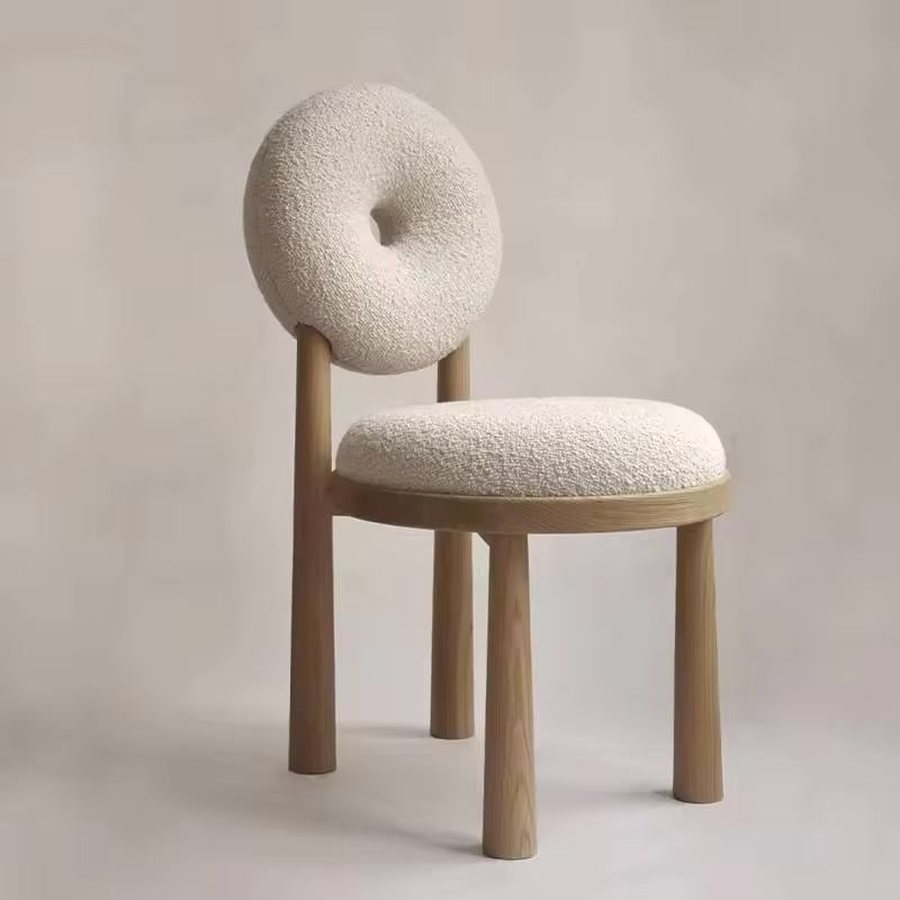
Solid wood dining chair, upholstered seat
Timber chairs fail at the joints long before they fail at the seat, which is why the tenon here is cut wide and the seat pad sits on a frame rather than on a board.
| Seat | Upholstered pad, screwed from below |
|---|---|
| Joint | Wide mortise and tenon, glued wedge |
| Frame | Wood |
| Cover | Fabric |
| Overall | 480 × 480 × 870 mm (W × D × H) |
| Colours | To order |
| Terms | EXW Foshan or DDP to your address |
Trade enquiries only · EXW Foshan or DDP · replies inside three working days
The joint that decides the life of a timber chair
Pub floors move furniture more than any other trade. Chairs get dragged by the back, tipped onto two legs to sweep under them, and loaded unevenly by guests who sit sideways. The joint that gives up first is the rear leg to seat rail, because that is where the leverage lands.
Wide tenons with a glued wedge hold there; dowel joints do not. That difference is invisible on a photo and it is the whole cost difference between two chairs that look the same.
Pads that come off the frame
The pad on this chair is screwed to the seat frame from below and stapled to its own board, so a torn cover comes off without touching the frame. Pads glued straight to the seat keep a chair out of service until the whole seat is rebuilt.
Fabric choice matters less than people expect on a low seat; what matters is that the seam runs at the front edge, where scuffing happens, rather than across the middle where a guest's weight works it open.
Send a floor plan, get a priced layout back
Tell us the counter length, the number of covers and the look you want. We come back with stool counts, heights, finishes and a written quotation — usually inside three working days.