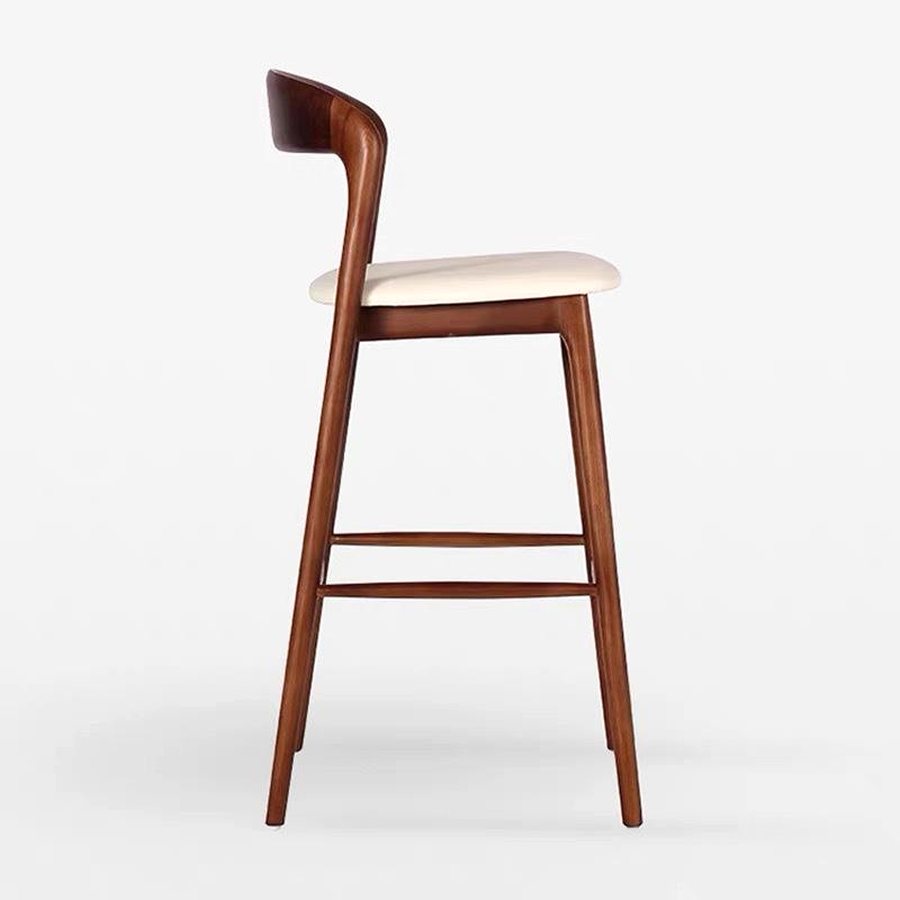
Solid wood stool, shaped back
Backs that follow the shoulder blade are a 3 mm difference in curvature that nobody can see and everybody can feel after an hour, and it is where a wooden stool earns its price.
| Frame | Solid wood |
|---|---|
| Seat | Timber |
| Back | Shaped, curved |
| Finish | Stained and sealed |
| Colour | To order |
| Terms | EXW Foshan or DDP to your address |
Trade enquiries only · EXW Foshan or DDP · replies inside three working days
The curve nobody sees
Flat boards across the back touch a guest at two points and leaves a gap in the middle, so the load goes into the edges and the guest shifts forward to get comfortable. Bend the same board on a 400 mm radius and the contact spreads across the whole back. Nothing about the silhouette changes; the difference is felt in the second hour, not the second minute.
Cutting that curve is where the cost sits. Flat backs come off the saw in one pass; shaped backs are either steam-bent or cut from a thicker block and sanded back, and the second method wastes more material but holds the shape without spring-back.
Timber movement, and why it matters at bar height
Wood takes on and gives up moisture with the season, and a stool leg is a narrow section that moves more than a table top. Kiln dried to the right range and sealed on all four faces, it moves less than a millimetre across a year, which the joints absorb. Sealed on three faces and left raw underneath, the same leg cups and the joint opens at the seat.
That is also why a timber stool should be re-oiled rather than re-lacquered. Oil goes into the surface and can be spot-repaired at the table; lacquer sits on top and has to be stripped off a whole leg to fix one chip.
Next in the same range
Send a floor plan, get a priced layout back
Tell us the counter length, the number of covers and the look you want. We come back with stool counts, heights, finishes and a written quotation — usually inside three working days.