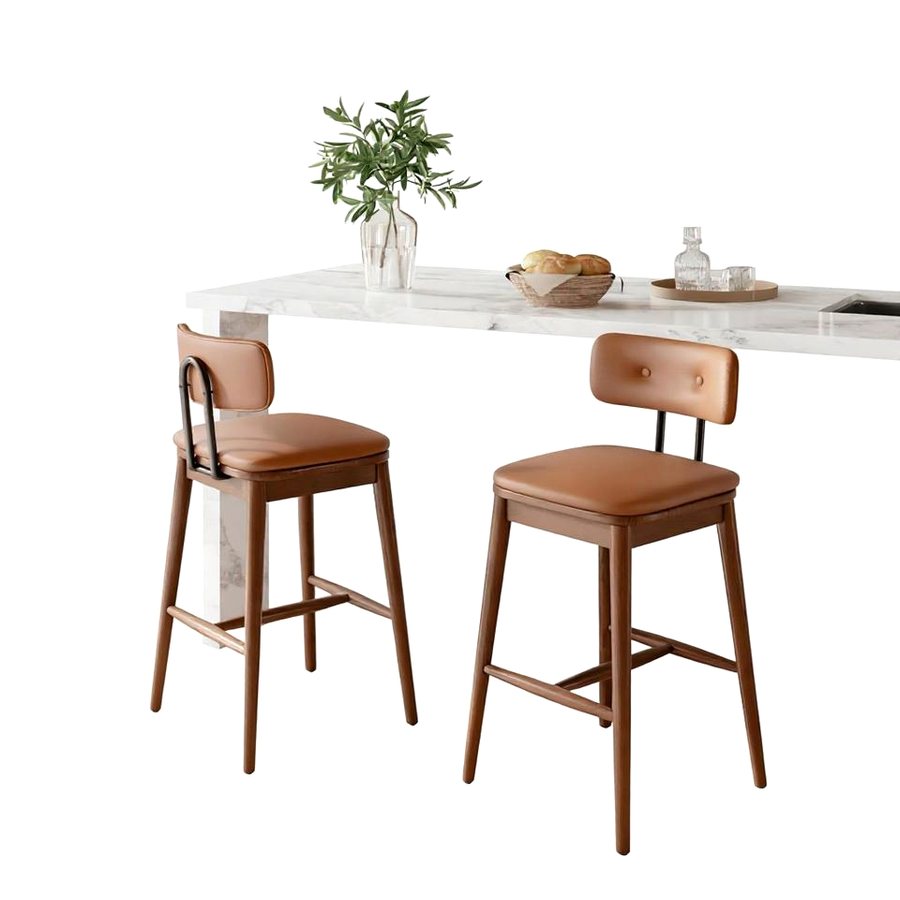
Mid-century counter stool, rubberwood
Nine inches of seat-to-counter gap is what makes a counter stool comfortable, and at 630 mm this one is built for a counter top that sits around 900 mm rather than the taller 1050.
| Seat height | 630 mm |
|---|---|
| Frame | Solid rubberwood |
| Back | Upholstered |
| Seat | Upholstered |
| Finish | Natural or walnut |
| Supplied | As a pair |
| Terms | EXW Foshan or DDP to your address |
Trade enquiries only · EXW Foshan or DDP · replies inside three working days
The 630 mm counter
Counters built for a 630 mm stool are different joinery from one built for a 750 mm stool, and mixing the two on one site is the most common fit-out mistake there is. At 900 mm the counter suits a guest who is eating as much as drinking; the taller 1050 mm counter puts the elbow higher and turns the same guest into a leaner.
Measured the other way, the gap between seat and counter underside should land near 250 mm. Push it to 300 mm and the forearms drop away from the counter; pull it to 200 mm and the thighs are trapped.
Rubberwood, honestly described
Rubberwood is a plantation timber, and it is chosen for two reasons: it is dimensionally stable once kiln dried, and it takes a stain evenly, which is why walnut and natural finishes come out clean on the same species. It is softer than ash or oak, so it dents rather than scratches, and a dented leg on a stained frame is repairable with a touch-up stick rather than a respray.
The upholstered back on a timber frame is where a cheap build shows itself. Look for the back panel screwed into the frame rails rather than stapled to a plywood shell; the screwed version can be re-covered, the stapled one is a replacement job.
Next in the same range
Send a floor plan, get a priced layout back
Tell us the counter length, the number of covers and the look you want. We come back with stool counts, heights, finishes and a written quotation — usually inside three working days.